Why Fit Matters: Made-to-Measure vs Off-the-Rack
Ask staff what they dislike about their uniform and most answers come back to fit: the jacket that pulls across the back, the trousers that only stay up with a belt, the sleeves that are always too long. Fit is not a luxury detail. It decides whether a uniform is comfortable, whether it looks as though it belongs to the person wearing it, and how long it lasts.
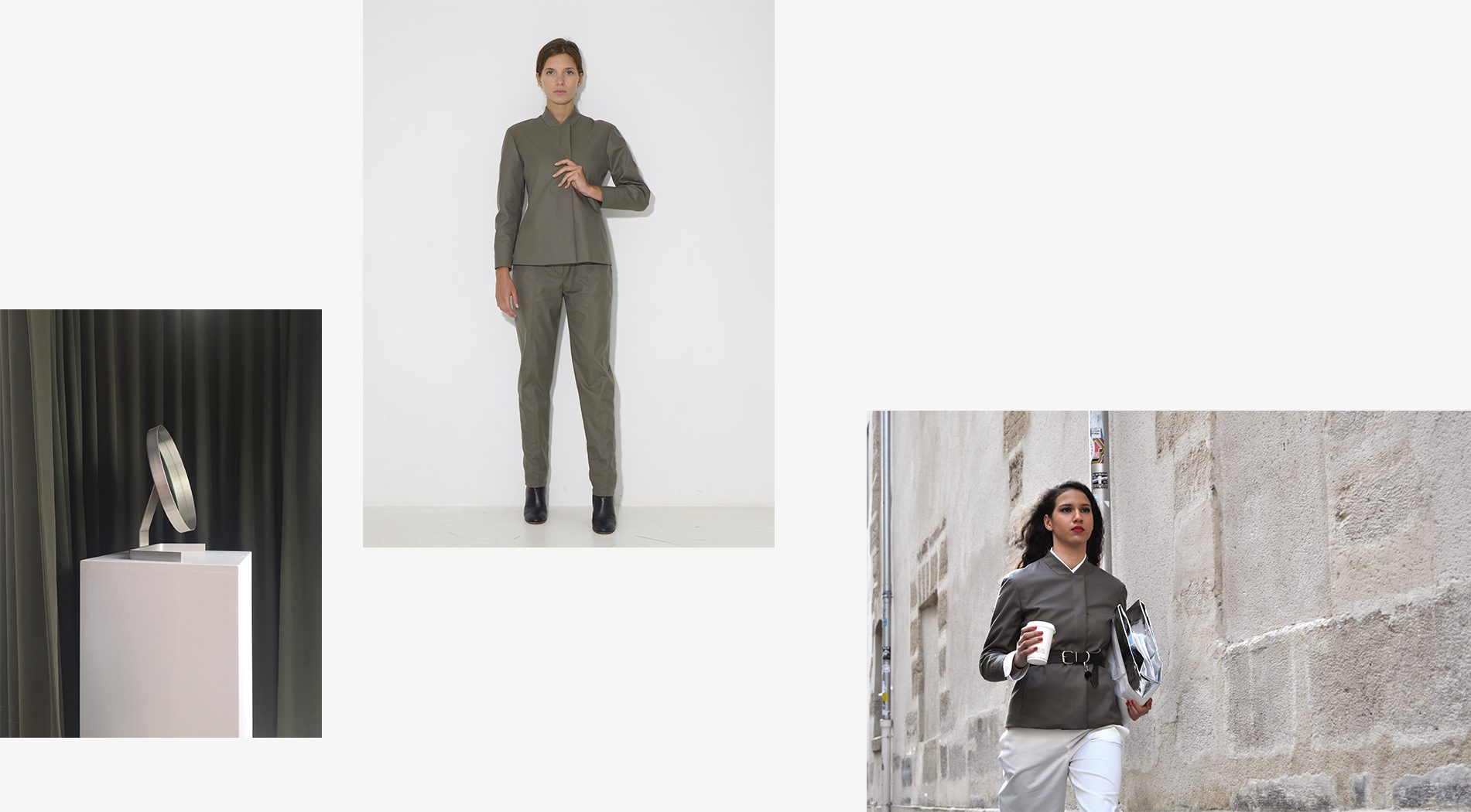
What we mean by fit
Fit is the relationship between a garment and the body inside it, both standing still and moving. A jacket can measure correctly across the chest and still fit badly if the shoulder sits too wide, the armhole is cut too low or the balance between front and back is wrong for the wearer’s posture. For uniforms the moving part matters most. People reach, bend, carry trays, push trolleys and climb stairs for hours, and a garment that only fits in front of a mirror does not really fit.
Why fit matters more in a uniform
When you buy your own clothes, you choose the shop, the brand and the size that suit you, and you leave everything else on the rail. Staff do not get that choice. They are handed a garment designed for a whole team and asked to wear it five days a week. If it fits badly they cannot swap it for something else, so the problems add up:
- Comfort and focus. A waistband that digs in or a collar that rubs is a small irritation at nine in the morning and a real distraction by the end of a double shift.
- Movement and safety. Sleeves that are too long catch on handles and trail through sauces. Trousers that are too long are a trip hazard on stairs and wet floors. A jacket that is too tight restricts the arms when someone lifts luggage or a heavy tray.
- Appearance. A well-cut uniform looks considered even in a modest cloth. A poorly fitting one looks borrowed, however good the fabric.
- Durability. Garments under strain wear out sooner. Seams split at the seat and armhole, buttons pull away and cloth thins where it rubs. Good fit is one of the cheapest ways to extend a uniform’s life.
- Belonging. People who feel their uniform was made with them in mind wear it with more pride, and guests notice the difference.
Off-the-rack: how stock sizing works
Off-the-rack, or stock, uniforms are made in advance in a fixed set of sizes. A pattern is drafted for one base size and then graded up and down in set steps. The garment fits the base size well and fits the others progressively less well, because real bodies do not change evenly in every direction. Two people with the same chest measurement can differ by several centimetres across the shoulders or in the length of the back.
Stock sizing has real strengths. It is quick, because the garments already exist. It is usually the least expensive option per piece. A lost or damaged item is easy to replace, and a seasonal worker who starts on Monday can be dressed the same day. For pieces that are loose by design, such as polo shirts, knits and aprons with adjustable straps, a good stock range is often all a team needs.
Its weakness is everyone at the edges of the size chart: the very tall, the petite, the broad-shouldered, anyone whose proportions differ from the fit model. In most teams that is a lot of people.
Made-to-measure: a proven pattern, adjusted
Made-to-measure starts from an existing pattern, the one developed for the uniform design, and adjusts it to each person. We take a set of body measurements, try a fitting garment on, note the changes needed, such as a longer sleeve, a narrower shoulder, more room in the seat or a correction for a sloping shoulder, and cut the final piece to those notes. It is different from bespoke tailoring, where a new pattern is drafted from scratch for one person, and it is far more practical for a team of twenty or two hundred.
The result keeps the look of the uniform but fits the body underneath it. Made-to-measure takes longer than stock, because each piece is cut and made to order, and it costs more per garment. It also depends on an accurate record of everyone’s measurements, which becomes valuable in its own right when replacements are needed.
The middle way most teams take
Very few of our projects are all one approach or the other. A typical staff wardrobe mixes three:
- A wider size range. More size points than a catalogue offers, with separate cuts where body shape calls for them and length options such as short, regular and long for jackets and trousers.
- Made-to-measure for key pieces. Tailored jackets, trousers and dresses for the most visible roles, where fit shows most and the garment is most structured.
- Stock for the easy pieces. Shirts in a good spread of sizes, knits, polos and aprons.
Adjustability helps all three: side tabs or a discreet elastic section at the waist, generous seam allowances that a tailor can let out, and hems with enough turn-up to lengthen later. We describe these details in how to design a hotel uniform staff will love.
Questions we are often asked
Is made-to-measure worth the extra cost?
For tailored, structured pieces worn every day by front-line staff, we think it usually is, because a garment that fits lasts longer and is replaced less often. For loose or casual pieces, a well-planned size range gives most of the benefit for less. We set out the wider picture in uniform cost per employee.
How long does it take?
Longer than ordering stock. Measuring days, a fitting and production all have to be scheduled, so we plan made-to-measure pieces well ahead of an opening or a relaunch. The exact timing depends on the number of people, the pieces and the workshop calendar, and we agree it at the start of each project.
What happens when someone new joins?
New starters are measured and added to the sizing file. Many clients keep a small buffer of the most common sizes, so a new team member can start work in a well-fitting stock garment while their own pieces are made.
What about bodies that change?
Bodies change with time, fitness, pregnancy and age. Adjustable waists, extra seam allowance and a simple way to ask for a refit keep the uniform working. Pregnancy deserves its own pieces rather than a larger size of the standard ones.
Does fit matter in physical roles too?
Very much. Physical work benefits from cut as much as from cloth: a deeper armhole and more room across the back for cooks, more room in the seat and knee for housekeepers who kneel all day. Our buyer’s guide to chef jackets and our comparison of front desk and housekeeping uniforms go into both.
How we measure a team
A measuring day works best when it is quick, calm and private. We set up in a quiet room, measure over light clothing and keep one person recording, so each appointment takes a few minutes. We take the measurements the patterns need, such as chest, waist, seat, shoulder, back length, sleeve and inside leg, then try on fitting samples in the nearest size and note the adjustments. We also ask how people like to wear their clothes, which matters as much as the tape measure: some prefer a looser trouser, some want sleeves a little shorter for work at the pass. Everything goes into a sizing file, kept confidential, that we use for production and for every reorder.
You can see examples of the fit we aim for on our uniforms page. If your team deserves better-fitting uniforms, get in touch with the studio.